

How to identify a faulty wirable plug?
Leave a message

Hey there! As a supplier of wirable plugs, I've seen my fair share of faulty ones. It can be a real headache for both consumers and businesses when a plug isn't working right. So, I thought I'd share some tips on how to identify a faulty wirable plug.
Visual Inspection
The first step in checking a wirable plug is a good visual inspection. Start by looking at the outside of the plug. Are there any cracks, breaks, or signs of damage on the casing? If you see any, that's a big red flag. Cracks can expose the internal wiring, which is a serious safety hazard.
For example, if you're looking at an L Type Monoblock Plug, make sure the plastic housing is intact. A cracked casing can let in moisture or dust, which can cause short - circuits over time.
Also, check the prongs. They should be straight and not bent. Bent prongs won't make a proper connection in the socket, and they can even cause arcing, which is a fire risk. If the prongs are loose or wobbly inside the plug, that's another sign of trouble.
Take a look at the wires coming out of the plug. Are they frayed or damaged? Frayed wires can expose live electrical conductors, which is extremely dangerous. Sometimes, the insulation on the wires can wear off due to constant bending or rubbing against sharp edges.
Testing the Continuity
If the visual inspection doesn't show any obvious problems, the next step is to test the continuity of the plug. You'll need a multimeter for this. A multimeter is a handy tool that can measure electrical properties like voltage, current, and resistance.
First, set your multimeter to the continuity or resistance setting. Then, disconnect the plug from any power source. It's really important to do this to avoid getting electrocuted.
Touch one probe of the multimeter to the tip of one prong and the other probe to the corresponding wire inside the plug. If the multimeter beeps or shows a very low resistance (close to zero), it means there's a good electrical connection. Do this for each prong and its corresponding wire.
If the multimeter doesn't beep or shows a very high resistance, there's a break in the circuit somewhere. It could be a loose connection inside the plug, a broken wire, or a problem with the prong itself.
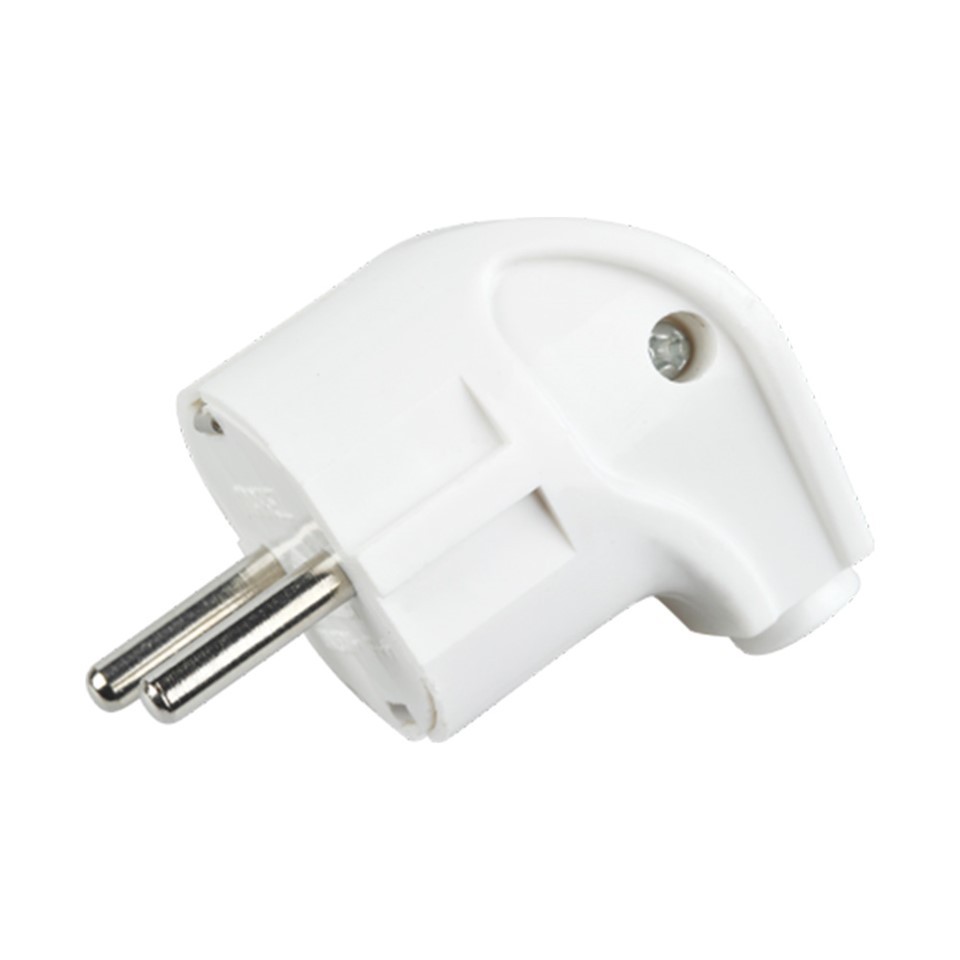

Let's say you're dealing with a European 2 Pin Plug. You need to test the continuity of both pins and their wires. If there's no continuity in either of them, the plug is faulty and needs to be replaced.
Checking the Polarity
Another important aspect is to check the polarity of the plug. In a correctly wired plug, the live wire should be connected to the appropriate prong, and the neutral wire should be connected to the other.
For a grounded plug like the Grounded Male Plug, the ground wire should also be properly connected. Incorrect polarity can cause problems with electrical appliances and can even be a safety hazard.
You can use a polarity tester to check the polarity of the plug. A polarity tester is a simple device that lights up or gives a signal depending on the polarity of the electrical connection.
If the polarity is incorrect, it could be due to a wiring mistake inside the plug. In some cases, it might be possible to re - wire the plug correctly, but if you're not confident, it's best to replace it.
Overheating Issues
Overheating is a common sign of a faulty wirable plug. If you notice that the plug feels hot to the touch after using an appliance for a while, there's definitely something wrong.
Overheating can be caused by a number of factors. It could be due to a poor connection between the prongs and the socket, which causes increased resistance and generates heat. Loose wires inside the plug can also lead to overheating.
Sometimes, using an appliance with a higher power rating than the plug is designed for can cause overheating. For example, if you plug a high - wattage heater into a plug that's only rated for low - power devices, the plug may overheat.
If you find that a plug is overheating, immediately unplug the appliance and stop using the plug. Continuing to use an overheating plug can cause a fire.
Signs of Arcing
Arcing is a serious problem that can occur in faulty plugs. Arcing is when an electrical current jumps across a gap in the circuit, creating a spark. You might see or hear small sparks when you plug or unplug an appliance.
Arcing can be caused by loose connections, damaged prongs, or a build - up of dirt and debris inside the plug. It can also be a sign of a more serious electrical problem, such as a short - circuit.
If you notice any signs of arcing, it's crucial to stop using the plug right away. Arcing can damage the plug and the appliance, and it's a major fire hazard.
Conclusion
Identifying a faulty wirable plug is an important skill that can help keep you and your property safe. By doing a visual inspection, testing the continuity, checking the polarity, and being aware of signs like overheating and arcing, you can spot problems early and take the necessary steps to fix or replace the plug.
If you're in the market for high - quality wirable plugs, we've got you covered. Our plugs are designed and manufactured to the highest standards, ensuring safety and reliability. Whether you need an L Type Monoblock Plug, a European 2 Pin Plug, or a Grounded Male Plug, we have a wide range of options to meet your needs.
If you're interested in purchasing our wirable plugs or have any questions, feel free to reach out to us for a friendly chat and discuss your requirements. We're always happy to help!
References
- Electrical Safety Foundation International. (2023). Electrical safety tips.
- National Fire Protection Association. (2023). Electrical fire prevention.


